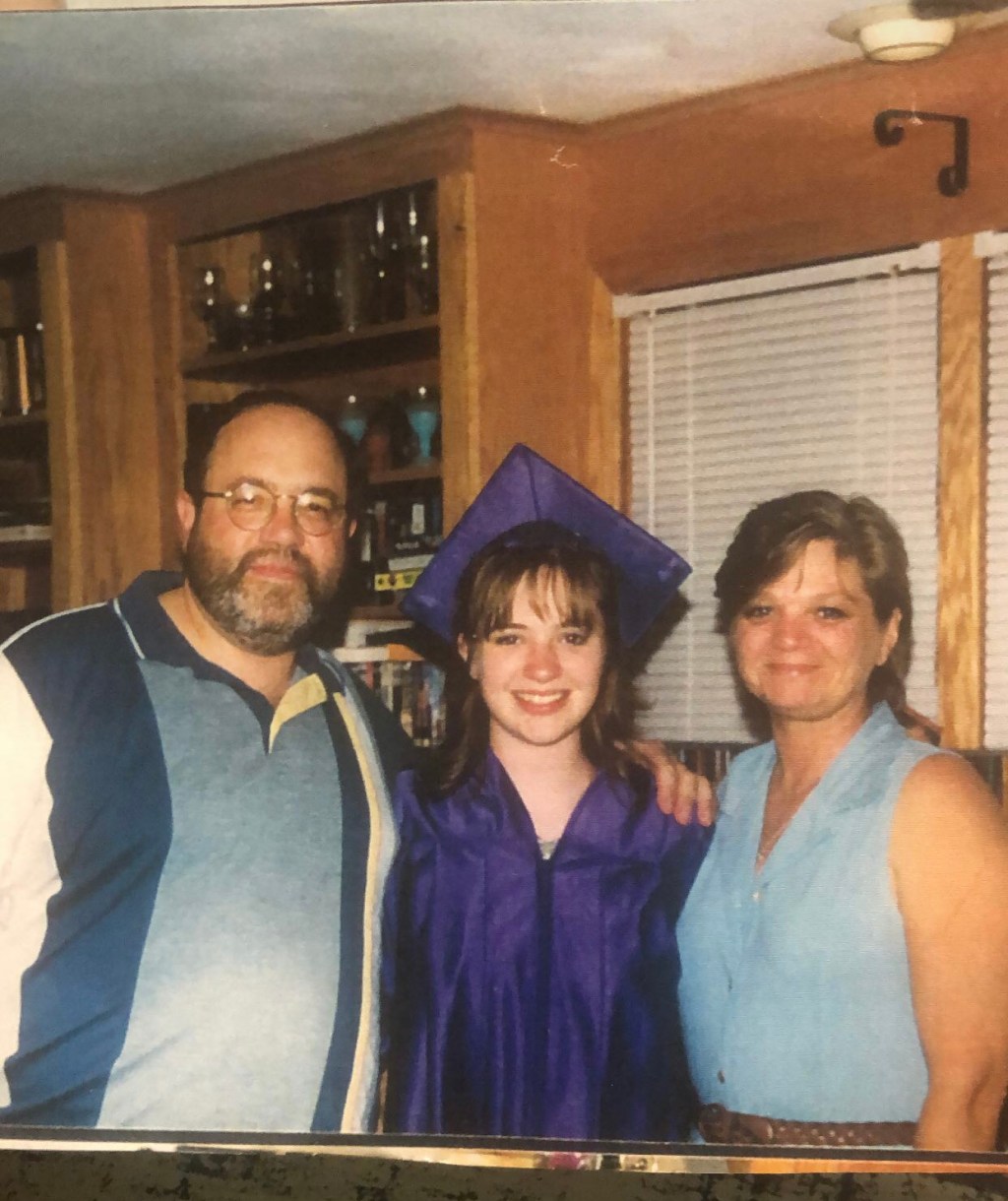
I am experiencing a level of grief that I did not know existed.
I have accepted an ADHD diagnosis I was given well over a few years ago and have promptly ignored. Acceptance has opened my eyes to a world where I am no longer the villain trying desperately everyday to make up for where I lack. I feel like I was invited into Steve’s Minecraft world, and I am finally one of the accepted people now. For my whole life, I was on the outside unable to get in and not always sure why.
I was always late and two steps behind. Literally. I was last for running in gym class, last to get in or out the door, last minute with every single assignment, chore or project. Some days, no matter how hard I try, I can not get out of the house on time or in a timely way, at all.
“What if I forget something” paralyzes me inside the house as I frantically run around gathering everything I can think of to support whatever endeavor waits for me outside. Water? Caffeine? Band-Aids and ibuprofen? Asthma medication? Do I have a snack? Do I need a snack? How many hands do I have and ugh fuck it, I ‘ll go get a bag.
The first few minutes of every single drive consists of me running lists in my head of things I could possibly need or things I could have forgotten. It is a miracle that I have not forgotten a human being.
I was the loudest, the one who needed the most and felt the biggest. My sister was shy, and my parents constantly talked about that as if it were a negative. I understood the assignment and became obnoxiously outgoing. They said I did my own thing, marched to my own beat; I was the rebellious and dramatic one. I asked questions like “why”, and “how” and wanted to know the reason for rules and boundaries. I have a deep, insatiable thirst for understanding and an unbearable temper when I am confused.
I was identified as the “target patient” in family systems therapy in like 1993/1994; I was either 13 or 14. By this time in my life, I had already been sexually assaulted by a much older teenager/almost adult. I was head over heels for this guy because how else do you cope with the magnitude of what you’re going through at 13?! I became the secret, which was not far off from the one always in trouble. I was used to being the odd one out. I definitely did not fit in with anyone in my family.
I was used to how that felt. I have said to myself for a very, very long time, “Oh, it’s definitely you”. “You are the only one who thinks this, you are the only one who feels that way about that”. “You are alone, and you are not worthy or valuable on your own, therefore whatever it is that you’re experiencing cannot possibly be true/accurate”.
Every report card, the same remarks. “Isn’t working to true potential”, “Is capable of more”, “talks too much”, “easily distracted”. School was not easy for me academically, which was very difficult to grasp when you at one point in your academia were labeled “gifted”. I’ve been trying to reach that six-year-old gifted status by proving my intelligence over and over again ever since.
My parents told me they did not have money set aside for me to attend college because they thought I hated school and were going to join the military. In fairness, that is exactly what I told them. But I was barely 18!! So, I did what all 18-year-olds do and opened as many credit cards as I could, to pay for school and living expenses, becoming obstinate that I would support myself.
That began the vicious and shameful cycle I would swirl around in for twenty-seven more years; bankruptcy, seized bank accounts by warrant and garnished wages. The messages my parents communicated about money were intense. I internalized the message that I am terrible with money and have been playing catch up ever since. When I was old enough to work more than little babysitting jobs, my dad said I had to open a bank account. So I did not.
After high school, my sister went to four years of college, graduated with great grades, met a guy and fell in love, got married and started having babies in her purchased house. That is a tough act to follow (no disrespect to my sister). Not following a timeline for societal success with a conservative republican dad was the 2000’s version of being a 60’s hippy and burning my bra. I was always “rebelling”…I was the problem child.
I’d been listening to “Small Talk” by Rich and Roxanne Pink recently as I am fascinated with the human brain and also have kids with neurodivergence. This brilliant book is ideal for anyone who knows of, is, or loves someone who is neurodivergent. This book is ESSENTIAL if you have ADHD or are a “later in life” diagnosed neurodivergent.
The author is reading her book for Audible, and she says, “It was only after the smog had cleared from some of my more serious mental health issues that my ADHD symptoms became more evident.”
That sort of happened to me. Ok, go on, you have my attention.
“Interestingly, after my diagnosis, I was met with a rather maddening consequence: a deep, internal sense that the doctor was wrong. That I didn’t have ADHD but had someone convinced them that I did.”
I was cooking and listening to the book on my headphones. I stopped in the middle of what I was doing.
Pause, Rewind, Replay.
She continued, ‘You cannot tell me I have a condition that explains the majority of my struggles…that is such an easy way out. I need to struggle. I need to fail. I need to beat myself up. That’s the way it’s always been”.
I dropped to the floor and could not hold back the flood of tears one second longer. I am not sure I was even breathing.
Co-author and husband Rich Pink says, “For many people receiving this diagnosis, that moment can be joyful and sometimes hilarious. But there is often also a kind of mourning for all of the years lost to self-hatred”…and, “They [adhders] have been given the missing puzzle piece they a have been searching for their whole lives, and it’s absolutely life-changing”!
I thought back to the beginning of the book. People with un-diagnosed ADHD are more likely to find addiction, be in abusive relationships, and be used/taken advantage of at work and in group work situations. I remember she said being treated badly felt familiar, deserving.
She talked about people pleasing as a means of making up for always lacking. How in the hell did she know that?!
Part two follows.
 Somewhere In The Middle
Leave a comment